Introduction
As the world moves deeper into the age of hyper-connectivity, the demand for unified platforms capable of handling real-time automation, intelligent data flow, and large-scale device orchestration has never been higher. With billions of connected devices powering homes, industries, and smart cities, traditional systems can no longer keep up with the complexity of modern digital infrastructure.
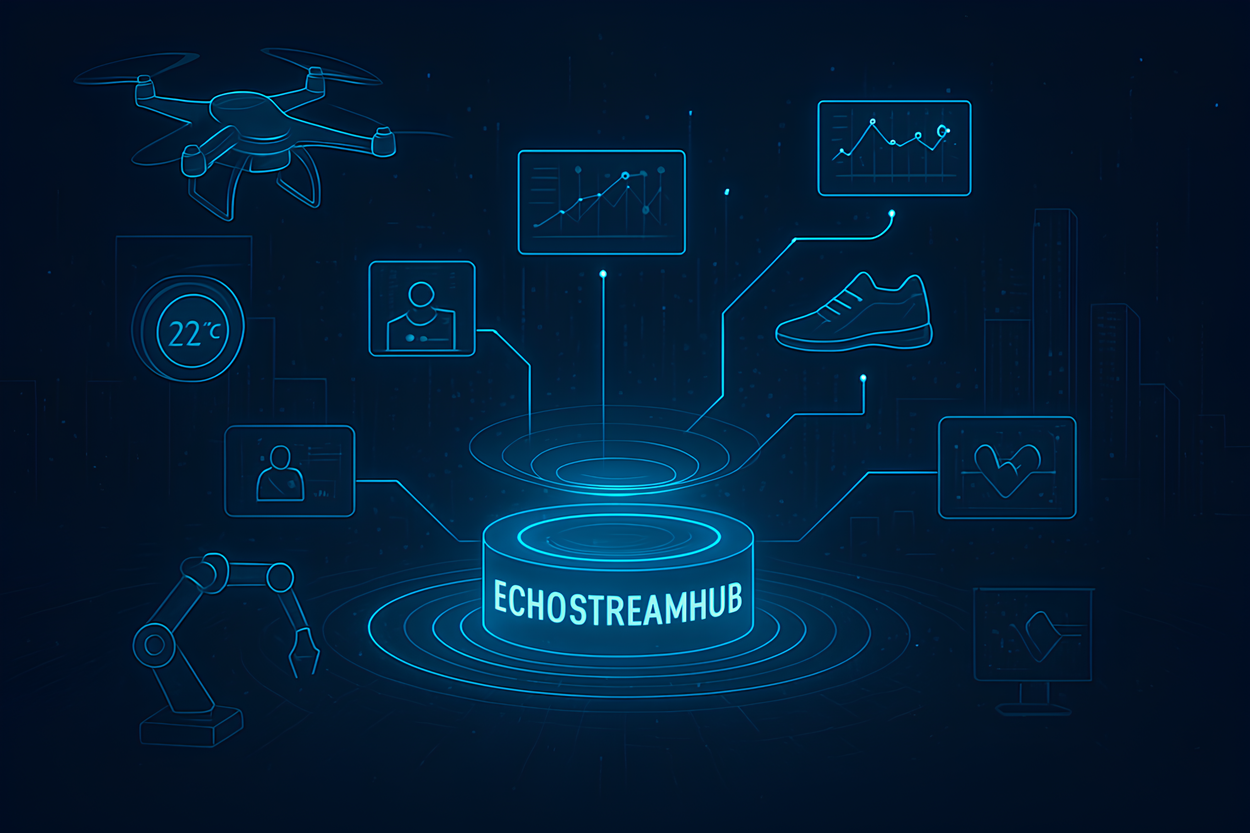
This is where Echostreamhub emerges as a next-generation solution — a hyper-integrated platform designed to bring device synchronization, intelligent analytics, and secure automation under one roof. In 2025, platforms like this are defining the foundation of connected ecosystems, shaping how digital networks operate at massive scales.
This blog explores how Echostreamhub is transforming industries, the architectural advancements driving hyper-integration, and why this technology is becoming essential for future-ready businesses.
The Transition from IoT to Hyper-Integrated Systems
For years, IoT revolved around basic connectivity — sensors sending data, devices responding to commands, and small-scale automated processes. But once the number of devices expanded globally, mere connectivity wasn’t enough.
Enter the era of hyper-integration, where systems are designed not just to communicate but to collaborate intelligently.
What Makes Hyper-Integration Different?
- Devices communicate seamlessly in unified networks
- Data flows across edge, cloud, and AI layers without friction
- Automation adapts dynamically to real-time conditions
- Security protocols safeguard every interaction
Platforms like Echostreamhub are built specifically to create efficient, interoperable ecosystems where millions of data points come together to deliver instant, intelligent results.
The Architecture Behind Echostreamhub: Built for Modern Demands
To support massive-scale digital networks, next-gen platforms follow multi-layered architectural frameworks. Echostreamhub exemplifies this by combining edge intelligence, cloud analytics, and automated orchestration within a flexible and scalable structure.
Core Architectural Components
1.Edge Computing Nodes
These nodes handle data processing at the source, minimizing latency and improving speed. Real-time decisions become possible even in high-load environments.
2.Cloud Integration Layer
The cloud aggregates and analyzes data across all connected devices. It enables long-term insights, pattern recognition, and predictive analytics.
3.AI and Machine Learning Engines
Advanced AI models identify anomalies, predict upcoming issues, optimize performance, and automate decision-making.
4.API-Driven Interoperability
Open APIs ensure that devices, applications, and systems can communicate smoothly without compatibility issues.
5.Zero-Trust Security
Every connection, device, and data packet is verified, ensuring that security remains airtight across the entire network.
With this architecture, Echostreamhub builds a unified environment where reliability, automation, and intelligent connectivity become the core value propositions.
Industry Applications: How Echostreamhub Is Transforming Real-World Operations
Healthcare
Real-time monitoring and automation are crucial for hospitals. Platforms like Echostreamhub support:
- Continuous vitals tracking
- Smart ICU automation
- Alert-based workflows for emergencies
- Integrated medical equipment coordination
This results in faster response times and safer patient care.
Manufacturing
Smart factories rely on predictive systems and adaptive robotics. Echostreamhub enhances:
- Predictive maintenance
- Robotics synchronization
- Production line optimization
- Real-time quality monitoring
This shift reduces downtime, improves output, and strengthens operational efficiency.
Smart Cities
Urban digitization requires instant responsiveness and high-volume data handling. With Echostreamhub, cities can optimize:
- Traffic flow using adaptive signals
- Public safety systems
- Energy consumption
- Environmental monitoring
Integrated city-wide automation leads to cleaner, safer, and more efficient urban living.
AI + Edge Computing: The Intelligence Powering Echostreamhub
In 2025, AI is no longer a luxury — it’s the backbone of real-time digital operations. Devices don’t just collect data; they interpret it, react to it, and learn from it.
Why Edge AI Matters
- Near-zero latency
- Reduced cloud dependency
- Enhanced data privacy
- Instant corrective actions
Imagine a fleet of autonomous delivery drones. With edge AI, they can reroute instantly during a traffic surge, avoid obstacles, or adapt to weather conditions — all without waiting for central servers.
This level of responsiveness is exactly what Echostreamhub is designed to support across industries.
Cybersecurity Challenges & Echostreamhub’s Role in Fixing Them
With more devices online, the risk of cyber threats increases. IoT systems are frequent targets of attacks such as botnets, firmware hijacking, spoofing, and man-in-the-middle threats.
Common IoT Threats
- Device impersonation
- Vulnerable firmware updates
- Data sniffing
- Large-scale DDoS attacks
Modern Security Solutions
- Zero-trust network verification
- Encrypted communication channels
- AI-based threat detection
- Blockchain-like authentication
Echostreamhub applies security at every architectural layer to ensure that operations remain protected against the rapidly evolving cyber threat landscape.
Sustainability: Making Technology Greener in 2025
Energy consumption is becoming a major global concern. Hyper-integrated systems must provide efficiency without compromising performance.
Sustainability Enhancements
- Energy-efficient sensors
- Low-power processing chips
- ML models optimized for minimal energy usage
- Cloud services running on renewable sources
Using predictive intelligence, farms, factories, and cities can significantly reduce waste and improve resource utilization — and Echostreamhub plays a key role in enabling these efficiencies.
Digital Twins: The Smart Way to Innovate and Plan
Digital twins help industries simulate complex systems before implementing them. Whether it’s a factory floor, energy grid, or smart mobility system, a digital twin helps:
- Predict errors
- Test workflows
- Simulate real-world stress conditions
- Improve team collaboration
Most large-scale IoT projects in 2025 begin with a digital twin model — and platforms like Echostreamhub provide the architecture needed to support this virtual planning.
Are Businesses Ready for Hyper-Integrated Infrastructure?
Adopting next-generation platforms requires planning and strategic evaluation.
Readiness Checklist
✔ Assess network scalability
✔ Adopt API-based modular platforms
✔ Integrate security from day one
✔ Train teams in cloud, AI, and automation
✔ Start with a pilot project, then scale
Organizations that prepare early face far fewer operational disruptions in the long run.
Common Challenges & Strategic Solutions
Challenge |
Solution |
| Fragmented device ecosystem | Use platforms supporting open standards |
| Delayed deployments | Begin with small pilot programs |
| High upfront cost | Adopt cloud-based modular layers |
| Data overload | Use edge filtering + AI automation |
These strategies make the transition toward systems like Echostreamhub smoother and more cost-efficient.
Future Trends: What’s Beyond 2025?
- Universal zero-configuration IoT onboarding
- Quantum-safe encryption
- Ultra-low-power nano-sensors
- 6G-enabled micro-latency networks
- Autonomous AI agents making ethical decisions in real time
Innovation will only accelerate — and platforms like Echostreamhub are laying the foundation for the next decade of intelligent automation and connectivity.
FAQs
What is Echostreamhub used for?
Echostreamhub is used to coordinate large-scale connected ecosystems by unifying IoT devices, automation processes, and AI-driven analytics under one platform.
Does Echostreamhub support real-time automation?
Yes. Echostreamhub integrates edge intelligence, enabling rapid data processing and immediate automated workflows without relying solely on cloud infrastructure.
Is it suitable for industrial environments?
Absolutely. Industries such as manufacturing, healthcare, logistics, and smart cities rely on Echostreamhub for reliable, mission-critical automation.
Can Echostreamhub reduce operational costs?
Yes. By automating processes, predicting issues, and optimizing device coordination, it significantly cuts downtime and enhances efficiency.
How secure is the platform?
Echostreamhub uses encrypted communication, device authentication, and zero-trust architecture to maintain end-to-end security across all connected nodes.
Conclusion
2025 marks the rise of hyper-integrated ecosystems where devices, data, and automation merge to create smarter, faster, and more responsive digital environments. Platforms like Echostreamhub represent this evolution by offering unified control, real-time intelligence, and secure interoperability across industries.
Whether it’s healthcare, manufacturing, or smart city management, hyper-integration is enabling a future where technology works seamlessly and intelligently at every scale.
Businesses ready to adopt modern frameworks will gain unmatched advantages — reliability, agility, and future-proof scalability.
The next chapter of digital transformation has already begun, and Echostreamhub is at the center of it.